Smartphone camera vs dedicated camera: which one do you need?
The holiday is booked. Or the baby has arrived, or an old hobby is resurfacing. And in another browser tab sits a proper camera, the kind that looks like it takes better photographs than a phone ever could.
One rule is worth carrying into that decision: if you cannot name the specific phone failure you believe you have, skip the camera.
Not because phones win on physics. They do not. A dedicated camera has far more sensor behind the lens, real optics in front of it, and controls that answer the instant you touch them. It takes the spec sheet outright.
What it does not take is the total. A second device costs money, embodied carbon, storage and hours of your life, and almost nobody adds those up before paying. Once you do, the phone already in your pocket wins for almost everyone.
refurbed sells both sides of this decision. Refurbished means professionally checked, cleaned and reconditioned, and hardly distinguishable from new: that applies to the camera phones here and to the cameras too.
The short answer on smartphone camera vs dedicated camera
Most readers land in the first group.
Keep the phone you own if your photographs end up on screens, in messages, on social feeds or as small prints. That covers holidays, birthdays, food, pets, houses, most travel and nearly all family documenting.
Keep the phone if you cannot name the failure. Better photos is not a failure. My daughter blurs every time I shoot indoors is.
Add a camera if you shoot moving subjects in poor light, need reach past the longest lens your phone physically has, work with flash, shoot for hours at a stretch, or need two cards writing at once because a missed frame costs money.
Add a camera if the photographing itself is the point. Dials, a viewfinder and a device that cannot interrupt you are legitimate reasons on their own.
Buy used if you buy at all. Most of a camera body's manufacturing impact is already spent, and the body will outlast several phones. Start with cameras rather than a new kit.
Do not buy storage you will not fill. A bigger phone tier is the most expensive and highest carbon way to solve a problem you may not have.
The question is failure rate, not best-case image quality
Side by side test shots settle nothing any more. In daylight, viewed on a phone screen, a current flagship and a full frame body both cleared good enough years ago. DPReview's technical analysis makes the point that social feeds and phone displays lowered the required quality threshold long before the hardware caught up.
The measurement that still discriminates is failure rate. Not how good the best shot is, but how often a device comes back with nothing usable, in the scenes you personally shoot.
Run it on your own camera roll. Find the photographs you wanted and did not get, then name why each one failed. The answers cluster into four: the processing picked the wrong moment; the subject sat further away than the lens could physically reach; the frame looked fine until you enlarged it; a feature combination you relied on quietly stopped being available.
That list is the shopping list. A camera fixes the second and third outright. It fixes the first only if you take over the controls yourself, which is a decision about how you want to spend your attention, not a decision about hardware.
Smartphone camera vs dedicated camera: the specs side by side
Here is where the dedicated camera wins, and it wins on physics rather than opinion. A one inch type sensor measures roughly 13.2 by 8.8mm. A full frame sensor is about 35.9 by 23.9mm, giving it close to 7.4 times the light collecting surface. Even a very bright phone lens at f/1.67 behaves more like f/4.6 on full frame once depth of field and total light gathered are accounted for. No amount of processing closes that gap.
One number deserves distrust: megapixels. A 200MP phone telephoto normally combines 16 pixels into one to gather enough light, so it does not hand you 200 megapixels of detail in ordinary use. A full frame body is expected to use its full resolution on every frame. 200MP phone versus 32MP camera therefore means nothing without sensor area, output mode and light level.
What the phones take back sits outside the specs: roughly a third of the weight, permanent availability, and publishing in one tap.
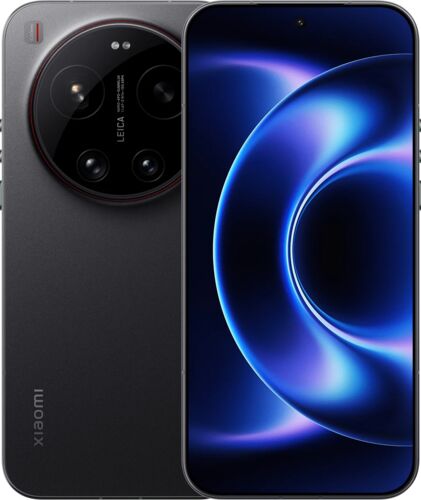
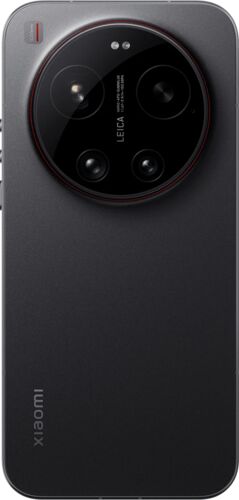
Sony Alpha 7 IV vs iPhone 17 Pro vs Xiaomi 17 Ultra
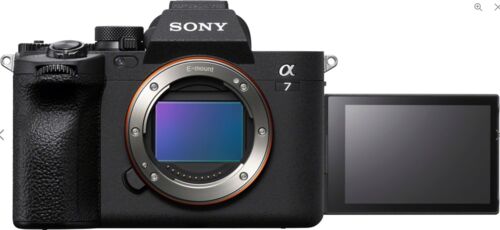
Main camera
32 MP
Other rear cameras
One sensor, lens dependent
Lens system
Interchangeable lenses
Weight
658 g, body only
Dimensions
131.3 x 96.4 x 79.8 mm
Memory cards
2 x SD UHS-II, 1 x CFexpress Type A
Connectors
USB-C 3.0, HDMI out, audio in, out
Year of release
2021
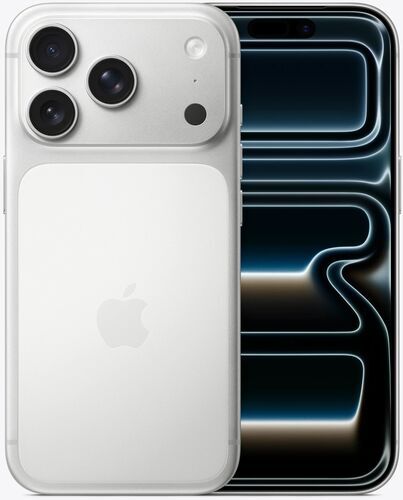
48 MP
48 MP tele, 48 MP ultra-wide, depth
Fixed, four rear cameras
206 g
71.9 x 150 x 8.8 mm
None
USB-C 3.1
2025
vs.
50 MP
50 MP ultra-wide, 50 MP tele, 200 MP tele
Fixed, four rear cameras
218.4 g
77.6 x 162.9 x 8.3 mm
None
USB-C 3.2
2026
What owning a dedicated camera costs on top of your smartphone
Price a camera the way you would price a second car, against the one you already have rather than against zero.
Your existing phone: nothing. No purchase, no new hardware, no shipping. It is the only free option on the list, and it is already in your hand.
The Pro version of a current flagship instead of the standard one: around 360 euro. More camera, same single device.
A new entry level mirrorless kit: around 850 euro, and the kit price is not the whole bill. Add a memory card, a bag, and a spare battery at around 67 euro.
Moving from 256GB to 1TB on the same phone: around 500 euro. The most expensive line here buys no new capability at all, only headroom.
Stretch it over six years and the ranking holds. Assume phones replaced every three years, one camera kept the full six, no resale, no repairs and no accessories: two standard phones come to about 1,958 euro, two Pro phones to about 2,678 euro, and two standard phones plus a new entry mirrorless kit to about 2,808 euro.
So the premium phone route costs less than an ordinary phone plus a new mirrorless camera. Buying the phone refurbished pulls those further apart again. Prices were checked in August 2026 and move constantly, so treat them as the shape of the answer rather than the answer.
The carbon maths of adding a second device
Apple publishes ISO based life cycle assessments for its phones, so the phone side of this comparison rests on real reporting. A current standard model comes in around 55 kg CO2e, its Pro sibling around 64 kg, and the 1TB Pro around 93 kg.
Read those three figures again. Moving from 256GB to 1TB on the same phone adds roughly 29 kg CO2e and changes nothing you can see from the outside. One device is not automatically the low carbon choice.
The camera side is where honesty matters. Camera makers rarely publish per model life cycle assessments. A widely cited third party estimate puts a generic 500g interchangeable lens camera at roughly 48 kg CO2e, but its methodology boundaries are inconsistent, so treat that as an order of magnitude rather than a match for Apple's own reporting.
Utilisation then swamps everything else. On that rough estimate, a camera shooting 500 photographs a year for six years works out near 16g of manufacturing CO2 per photograph. Push it to 10,000 a year and the figure falls to about 0.8g. The worst outcome on every axis is a camera in a cupboard, which is the real risk when a device gets bought to solve a problem nobody could name.
Storage: the smartphone camera cost nobody budgets for
This is the one place a phone can lose the money argument, and it loses to your own file format setting rather than to any camera.
Ten thousand photographs, by format:
Phone HEIF or JPEG: about 63 to 75GB
Entry mirrorless fine JPEG: about 87GB
Entry mirrorless compressed RAW: about 140GB
Entry mirrorless full RAW: about 270GB
Phone 48MP ProRAW: about 750GB
The last line is not a slip. A single 48MP ProRAW file runs around 75MB, roughly 10 to 12 times a HEIF, which makes phone RAW substantially larger than the camera's own RAW.
Then the subscription. At the time of writing, the gap between a 200GB and a 2TB cloud tier works out at roughly 420 euro over five years. Shooting everything in phone RAW can erase most of the phone's monetary advantage on its own. Cloud energy and duplicated copies matter too, though credible per photo carbon figures depend too heavily on provider and local grid to put a number on.
Practical version: shoot HEIF or JPEG unless a specific edit needs the extra data, and the advantage stays where it was.
The hours a second camera quietly takes
Capture to share is where the phone leads by the widest margin. Shoot, edit and send on one device, no cable and no card reader. Camera transfers over Wi-Fi remain fiddly enough that expert reviewers still complain about them.
Put a number on it. Fifty photo outings a year, with 5 to 15 extra minutes of importing, transferring and backing up each time, comes to roughly 4 to 12.5 hours a year, or 21 to 63 hours over five years. That is a working week spent moving files, for something most people do on holidays and birthdays.
It reverses for difficult photography. Sports, wildlife, flash lit work and unreliable low light all punish retakes, and a camera that lands the shot on the first attempt saves the salvage editing afterwards. Its nominal workflow is slower and its total time cost can still be lower.
Electricity is a rounding error either way. A 7.5Wh camera battery charged 100 times a year for six years uses about 4.5kWh, somewhere near 1.35 euro in total. Manufacturing and storage decisions dwarf it.
Where a smartphone camera still loses
Four failure modes. If one of them describes your photography, the verdict flips.
A dark moving child, not a dark building. Night modes work by stacking several exposures and aligning them into one frame. A still street stacks beautifully. A toddler, a dog, a dancer or leaves in wind do not: they ghost, because several moments are being forced into one image. A single fast exposure would have caught it, and a larger sensor is what makes a single fast exposure viable indoors.
Focal length islands, not a zoom. The 48mm and 200mm settings on a current flagship are crops from physical 24mm and 100mm modules. Quality shifts as the phone switches module, crops, combines pixels or blends frames. A genuine mechanical 75 to 100mm zoom, as on the Xiaomi 17 Ultra, matters far more than any headline digital multiplier, and a camera lens stays continuously optical across its whole range.
Phone RAW is not a clean single exposure. ProRAW arrives with Smart HDR, Deep Fusion and Night mode already inside it. It edits well, but it is not an untouched capture. Switch to a true single shot Bayer RAW app and real control comes back, along with lower resolution and visible noise at night. Remove the computation and the small sensor reappears.
Sustained shooting and redundancy. Removable batteries, two cards writing at once, a viewfinder that stays legible in hard sun, a grip that works with gloves, and a phone left free for navigation and calls. None of it matters on a social feed. All of it matters at a wedding or on an expedition, where the cost of missing one frame is the whole point. If that is your situation, start with cameras or mirrorless cameras.
Camera reasons that have nothing to do with image quality
Cameras are not dying, which surprises people. CIPA reported 2025 shipments up 11.2 percent, fixed lens cameras up 29.6 percent and mirrorless up 12.5 percent. Nobody buys a fixed lens compact in 2026 because it out resolves a flagship phone. They buy it for zoom, for tactility, for a distinctive look, and for separation from the phone.
Those are legitimate reasons, and they deserve saying out loud.
A camera is valuable partly because it does less. No messages, no notifications, no pull to publish before you have looked at the photograph. It creates a different state of attention.
A camera protects the phone. Heavy shooting drains and wears the device you rely on for payments, navigation and calls. A spare camera battery at around 67 euro is a smaller decision than pulling a phone replacement forward by a year.
Access cuts both ways. A phone gets into venues that turn away anything looking professional, and the inferior photograph you took beats the superior one you did not. A visible camera signals intent, which can win cooperation or empty a room.
Provenance is no longer a camera monopoly. Some phones now attach hardware backed content credentials to every frame, which can leave a phone photograph with stronger provenance than an unsigned file from a DSLR.
If any of that describes you, the resource smart route is a used body kept for years. Most of its manufacturing impact is already spent, which makes second hand both the most affordable and the most defensible way to own a real camera. Browse cameras, mirrorless cameras, DSLR cameras or action cameras on refurbed.
Smartphone camera vs dedicated camera: questions, answered
Is a smartphone camera good enough for holiday and family photos?
Yes. For photographs headed to a screen, a message, a social feed or a small print, a current phone clears the bar comfortably. The gap opens only in poor light with moving subjects, or when you need reach past the longest lens the phone physically has.
Does a dedicated camera take better photos than a phone?
In difficult conditions, yes. Sensor area and lens choice are physical advantages no processing replaces. In ordinary daylight, viewed on a screen, the difference mostly stops mattering. Failure rate in your own scenes is a more useful test than best case quality.
Is a refurbished camera phone more affordable than buying a camera?
Yes, on a six year view. Two standard phones over six years come to about 1,958 euro, against about 2,808 euro for two phones plus a new entry mirrorless kit. Buying the phone refurbished on refurbed widens that gap further.
Is one device always better for the environment?
No. Choosing 1TB instead of 256GB on the same phone adds roughly 29 kg CO2e without adding a second device at all. Storage tier, replacement frequency and how much you shoot matter more than how many cameras you own.
Is an older refurbished phone still a smart buy for photography?
Yes. Phone camera output passed good enough for screens and small prints several generations back, so a model that is two or three years old still covers holidays, family and everyday documenting. It costs less and carries a lower manufacturing footprint than a current flagship. Compare the options in smartphones.
Find a refurbished camera phone on refurbed
Every phone on refurbed is professionally checked, cleaned and reconditioned, then graded on looks alone: Premium, Excellent, Very Good or Good. All of them function flawlessly. You get a 12 month warranty and a 30 day trial, so you can test the camera on your own subjects before committing.
The environmental case is measurable rather than rhetorical. Choosing a refurbished iPhone 17 Pro at 256 GB instead of a new one saves around 84.3 kg of CO2e (86 percent less), roughly 31,400 litres of virtual water (89 percent less), 182 g of e-waste and 47 g of critical raw materials. Figures come from Fraunhofer Austria research, calculated to the ISO 14040 and 14044 standards.
And the rule one last time: name the failure you believe you have, or skip the camera. If you did name one, the cameras are here too.

Sign up for our newsletter for the first time and save 15€!
Never miss an offer again.
Information about the use of personal data can be found in our Privacy policy.
Get the refurbed app
For iOS and Android


Confirm sign-up
Click the link in our confirmation e-mail to receive your voucher. It will be applicable to purchases from € 200.
- © Refurbed Marketplace GmbH
- Accessibility
- T&C
- Privacy Policy
- Imprint
- Legal Notices
- European Data Act
- Cookie Policy