Black Friday 2026 trends: which electronics are worth waiting for
Black Friday has a reputation for the lowest prices of the year. But price tracking in Spain showed something different in November 2025. On Black Friday, 37% of the tracked prices were higher than the lowest price for the same product at the same shop in September and October; only 35% were lower.
Black Friday still brings real savings, but only in some categories. The Black Friday 2026 trends follow the same pattern: some categories are worth waiting for, while others are not. Rising memory and display costs make this year harder to predict than last year. The most reliable plan is to choose a few products that have been on sale for a while, set a target price for each and buy one when it reaches that price.
Here is the short answer:
- Look first: Robot vacuums, selected OLED and Mini-LED TVs, and headphone, soundbar and smart-home models that have been on sale for a while are the most likely to offer worthwhile discounts.
- Look next: Previous-generation phones, watches, tablets and laptops can still be worth buying, but only if you compare prices for the exact configuration.
- Expect little: RAM and SSDs, scarce flagship graphics cards and current console hardware are unlikely to see deep discounts this year.
Black Friday falls on Friday 27 November 2026 and Cyber Monday on Monday 30 November. That gives you a few weeks to decide what you need, what a fair price would be and when to buy. You can also see whether refurbished devices and refurbed's Green Friday fit your plans.
What Black Friday 2025 price tracking showed in Spain
The clearest category-by-category price data come from Spain, where tracking covered 2,475 products in 35 categories across 61 websites. On Black Friday, 35% of the tracked product prices were lower than the lowest recorded price for the same product at the same shop during September and October; 37% were higher and 28% were unchanged.
A new low is a stricter test than a lower price at the same shop: on Black Friday, the product had to cost less than it had at any monitored shop in September and October. Only 9% of the products reached a new low, and their savings averaged roughly 12%. Those bargains were real, but much more common in some categories than in others. Here is the share of products in each category that reached a new low:
- Robot vacuums: 34% reached a new low, the highest share in the comparison.
- Power banks: 26% reached a new low, making these accessories a useful source of deals.
- Laptops: About 25% reached a new low, making laptops a strong source of deals.
- Televisions: 22% reached a new low, giving you a good chance to save on a large purchase.
- Air fryers: 17% reached a new low, making them another appliance category worth watching.
These figures show the share of products that reached a new low, not the size of the discounts. Price comparisons were less encouraging for printers, e-readers and monitors, among other categories. The sample covers Spain, so it shows what happened in one market, not at every EU shop. Evidence about Black Friday prices is strongest for Spain, Belgium, France and Germany, but uneven elsewhere. The data do not support a reliable EU-wide average discount.
Five Black Friday 2025 offers, measured against normal prices
Real offers help put the category shares in perspective. These five offers from November 2025 are historical snapshots, not live deals or 2026 targets. Four are measured against a six-month average and one against the usual price, so treat the percentages as separate figures, not as one ranking:
- Samsung QE55QN80F television, Belgium: It cost €629, 36% below its six-month average.
- Sennheiser Sport True Wireless earbuds, Belgium: They cost €67.49, 32% below their six-month average. Shoppers could save more with an additional coupon, subject to conditions.
- Apple iPhone 15 with 128 GB, Belgium: It cost €589, 20% below its six-month average.
- HP OmniBook 5 Flip 14-FP0000NB laptop, Belgium: It cost €899, 26% below its six-month average.
- Dreame L50 Pro Ultra robot vacuum, France: It cost €799 on 21 November, about 20% below the price shoppers usually saw.
The Dreame shows why the comparison price matters. At €799, it was also about 38% below its €1,299 launch price, but that was not the price shoppers usually saw. The smaller discount, about 20% against the usual price, better shows how much shoppers could save.
Together, these offers show the pattern of 2025: discounts on selected products in competitive categories. TVs and robot vacuums featured in both the wider price tracking and these five offers. You could find laptop discounts too, though the exact configuration made a big difference. You could find bargains on individual audio products, but the evidence for strong discounts across the whole category is weaker.
Keep two things in mind for 2026. A discount on an older iPhone tells you nothing about the newest iPhone. And a good price for one laptop configuration does not apply to every combination of RAM, processor and display sold under the same family name.
How to tell a real Black Friday discount from an advertised one
A discount only means something if you compare it with the right price. Before the sale, write down the normal price of each product on your list: what reputable sellers charged for it during September and October when they had it in stock, including delivery. Then check the price history over the previous 60 to 90 days, and compare only identical products, with the same model, capacity, condition and included accessories.
An offer then has to pass two separate tests. Is it meaningfully lower than the normal price? And is it competitive with the product's recent low and the best alternative you could buy instead? A price can be below the normal price and still be higher than last month's promotional price. Buying at a price that only matches an earlier low can still be a sensible choice.
The percentage also depends on the price used for comparison. Say a product launched at €1,000, normally sells for €700 and is offered for €600. Compared with its normal price, you would save about 14%. The advertised 40% saving based on the launch price answers a different question.
EU rules help a little. When a seller announces a price reduction, the previous price it shows is generally its own lowest price in at least the preceding 30 days, subject to exceptions. That shows only the seller's own price history, not whether the offer beats competitors or the best price from earlier in the autumn.
The 2025 campaigns show how headline claims work. In Germany, selected Amazon devices, including Echo, Fire TV, Kindle and eero, were advertised at up to 50% off. That was the maximum saving, not an average across the category. Samsung's French campaign listed Galaxy Buds3 Pro at €179 and Galaxy Watch Ultra at €499. It also used app offers and extra promotional codes, which is why final eligibility matters. Apple's own store event gave gift cards on eligible purchases, and a gift card for future spending does not lower what you pay at checkout.
Keep promotional benefits separate from the cash price, and work out what each is worth to you:
- Gift cards: A gift card is worth only what it saves you on purchases you already planned, so a €100 card has little value if using it means buying something you did not want.
- Trade-ins: Count only the bonus above what your old device would fetch on its own. If you hand over a device worth €250 for €300 of credit, the benefit is €50, not a €300 discount.
- Cashback: Check whether it is an instant reduction or money you must claim later, and note the eligible model, the seller, the purchase date and the claim deadline.
- Bundles: Subtract what the items you want would realistically cost separately from the bundle price, because an unwanted accessory has no value to you just because it has a list price.
- Phone contracts: Compare the total payments over the full term with the cost of buying the phone and an equivalent separate plan.
What is different about Black Friday 2026: rising component costs
People often assume electronics get less expensive each year. In 2026, rising memory and display costs work against that expectation. November may still bring strong promotions, but sale prices could remain higher than the lowest prices in previous years.
Start with memory. A late-September industry forecast said fourth-quarter contract prices for conventional DRAM would rise by 10 to 15% compared with the previous quarter, while NAND flash prices would rise by 15 to 20% over the same period. It also noted pressure on mobile and graphics memory and said some PC brands were reducing SSD capacities to manage costs. These forecasts concern component prices, not guaranteed rises in retail prices. Finished products already in stock, supply contracts and promotions can delay or soften any rise in shop prices.
TVs face similar cost pressure. A September industry analysis projected that panel costs would rise by 4 to 7% in the fourth quarter, while demand for panels weakened and major manufacturers cut production. Weak demand can give brands a reason to promote, while higher costs limit how aggressively they can replace the stock they sell. Older TV models already in stock and selected models on promotion are still worth watching for deals, but steep price cuts across the newest ranges look less likely.
Console list prices have already risen in 2026. The recommended European prices from 2 April are €649.99 for the PS5 with disc drive, €599.99 for the PS5 Digital Edition and €899.99 for the PS5 Pro. At the European My Nintendo Store, the Nintendo Switch 2 rose from €469.99 to €499.99 on 1 September. These are official reference points, not what any retailer charges today.
Judge RAM and SSD deals against what local sellers charge now, and do not expect a November sale to bring back 2025 prices. With laptops and phones, compare capacity as carefully as price: a lower-priced configuration with less memory or storage may look like a bargain but still be a downgrade.
Where to expect small discounts on Black Friday 2026
Some products are unlikely to see a large, straightforward cut in the price you pay. Sellers may still run offers, but waiting for a big reduction is risky. A different approach usually makes more sense:
- Retail RAM and SSDs: Do not count on a price cut, although isolated offers may save you 5 to 10%. If today's price is competitive, buy the capacity you need.
- Scarce high-end graphics cards: Expect 0 to 5% off, or no worthwhile offer at all. Availability and component costs can matter more than the sale date, so a fairly priced graphics card from a lower tier or a complete PC is a better option.
- Current console hardware: Expect a direct price cut of 0 to 15%. Since 2026 list prices are higher, look for a price cut funded by the retailer or a bundle with games and accessories you would buy anyway.
- The newest iPhone and new premium Macs: If you buy either directly from Apple, expect little reduction in the price you pay. Look for a reseller's price cut or a gift card you already know you'll use.
- Specific colours of newly launched products, limited editions and newly released specialist models: Limited supply and few alternatives make a good offer unlikely, so stay flexible on colour, finish or generation.
Other categories call for a closer look rather than a blanket verdict. Evidence from previous years does not show that e-readers, printers or general-purpose monitors reliably offer bargains. But a particular Kindle, gaming display or printer can still be a good deal if its own price history and total cost support the offer. You could save 5 to 20% on gaming monitors, routers, cameras or lenses, but the saving depends heavily on the model. Check the exact product's price history before deciding to wait. For cameras and lenses, search for the exact camera body or lens model. Cashback, kit contents, mount compatibility and whether an item is new or refurbished can make comparisons of advertised prices unreliable.
Where to look first on Black Friday 2026: robot vacuums, TVs, audio and smart home
Three different goals point to different products. For the biggest percentage discount, look at smart-home devices and older robot vacuums, but check which price the advertised cut is measured against. To save the most money, a TV or a capable robot vacuum you already planned to buy is a better target: a modest percentage discount on an expensive purchase can save you more than a spectacular discount on an accessory. To avoid disappointment, pick two or three models you would be happy with and buy when one reaches a price you can justify, instead of waiting for one product to reach the perfect price on 27 November.
The discount ranges below are forecasts for selected deals, measured against the normal competitive price. They are not announced offers or category averages.
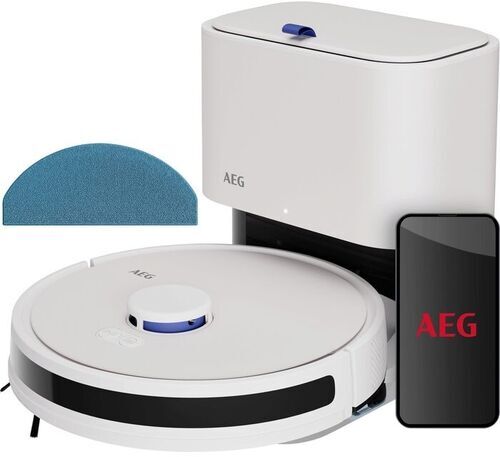
Robot vacuums (15 to 30%, occasionally more on clearance). An established model with the dock and cleaning system you need often beats the newest top-of-the-range machine. Compare robot vacuums by how well they detect obstacles, cross door thresholds and handle carpets. Check how they wash and dry mops, what bags and detergent cost, and whether spare parts are available. Roborock, Dreame, Ecovacs and Eufy are brands worth comparing, and none is the best choice at every price. A higher suction figure alone does not mean better cleaning. Aim for a model with the exact dock and features you need, priced roughly 20% below the established market price and near a recent low.
TVs (10 to 25% on selected OLED and Mini-LED models, including older stock). The best opportunity is often a 55- or 65-inch model from an established range. Compare TVs from LG, Samsung, TCL, Hisense, Philips, Sony and Panasonic within the same performance tier, because OLED or Mini-LED branding and a large panel do not by themselves guarantee equal picture quality. Aim for a price 15 to 20% below the normal competitive price, and check recent price history to confirm the saving. Before you treat a cross-border offer as the best deal, check delivery, installation and return costs. If a 2025 model is already heavily discounted in October, a small extra cut can be enough to make it worth buying.
Audio (15 to 30% on established noise-cancelling headphones, earbuds and soundbars). Sony, Bose, Sennheiser, JBL, Samsung and Sonos are sensible names to watch. The most attractive purchase is often the previous premium generation, when its successor adds little for you. For headphones, fit, microphone quality and battery condition matter alongside noise cancelling. For soundbars, compare the whole package, because a bar on its own and a set with a subwoofer and rear speakers are different purchases. Aim for about 20 to 25% below the normal price on a model that already meets your needs.
Smart home (20 to 40% on established streaming sticks, smart speakers, cameras and lighting kits). These devices can have higher percentage discounts than TVs but save you fewer euros. They can also bring extra costs. A camera that saves €30 at checkout but needs an unwanted subscription can end up costing more, so add up the costs of recording plans, hubs and cloud features, and check app support and compatibility. Aim for a hardware price about 25 to 35% below its normal price. Include the cost of the first year of any required service when you compare offers, and do not count a trial subscription as a permanent benefit.
Where to look next: phones, watches, laptops and tablets
Widespread price cuts are less likely in these categories than in the first four, so the exact configuration matters more than the percentage discount.
Phones (10 to 20%, with selected clearance offers around 25%). Prioritise established Android flagships and previous-generation iPhones, and look for the exact storage variant you want. Check that enough software support remains for the years you plan to keep the phone. Foldables can attract aggressive offers, so judge their cash price separately from any trade-in promotion. When comparing smartphones, aim for a clear 10 to 20% saving on the exact model.
Watches and fitness wearables (10 to 25% on the previous generation). Compare the previous generation's useful features with the latest model's. Navigation, battery life, phone compatibility and service subscriptions often matter more than a new sensor. Check those four before you compare prices on smartwatches.
Laptops (8 to 20%). Compare processor, RAM, SSD, display and keyboard layout, because one family name covers many configurations. A capable laptop with 16 GB of RAM can be a better buy than a newer one with more limited specifications. Demanding work may need more memory, though, so base your minimum RAM on the work you plan to do. Match those specifications first, then compare laptops on price.
Tablets (8 to 20% on mainstream models). Compare the total cost of a tablet with a keyboard, a stylus and the storage you need. The tablet with the lowest price on its own might not give the lowest total once you have everything you need.
Chargers and power banks from known brands are an easy addition: aim to pay 15 to 30% less than their normal price, as long as the output, capacity, ports and included cables match what you need. Add accessories only to complete a purchase you planned, and never spend more just to collect small discounts.
Across all four categories, buy when the exact configuration offers a clear 10 to 20% saving, or when a smaller discount brings its price down to a credible recent low. A stronger configuration can be worth more than a bigger percentage discount.
Set your target prices before Black Friday starts
Percentage ranges only help once you turn them into prices. These eight examples are illustrative calculations, not current quotes or predictions for any product. Use the normal price of the exact model you want instead:
- Robot vacuum with a suitable dock: If the usual price including delivery is €700, a saving of 20 to 30% means paying €490 to €560.
- Television (OLED or Mini-LED): If the usual price is €1,200, a saving of 15 to 20% means paying €960 to €1,020.
- Established premium headphones: If the usual price is €250, a saving of 20 to 25% means paying €187.50 to €200.
- Established smart-home device: If the usual price is €80, a saving of 25 to 35% means paying €52 to €60.
- Previous-generation smartwatch: If the usual price is €300, a saving of 15 to 25% means paying €225 to €255.
- Established smartphone: If the usual price is €600, a saving of 10 to 20% means paying €480 to €540.
- Suitable laptop configuration: If the usual price is €900, a saving of 10 to 15% means paying €765 to €810.
- Branded charger or power bank: If the usual price is €50, a saving of 20 to 30% means paying €35 to €40.
For each product on your shortlist, write down four numbers: the normal price, the recent low, a good price and an exceptional price. A good price is low enough to justify buying now. An exceptional price offers an unusually attractive saving. Set an alert at each level: having a good price as well as an exceptional one keeps you from turning down a worthwhile offer while you wait for a round number.
Give most of your research time to one substantial purchase, such as a TV or a robot vacuum if you need one. Make a short second list of items, such as established audio products, a watch or a phone that already meets your needs. Add accessories only to complete a purchase you planned.
When to buy around Black Friday 2026 and how to compare offers across the EU
These are periods to watch, not confirmed 2026 sale dates. In 2025, some major campaigns began well before Black Friday: Samsung France's started on 17 November and Amazon Germany's on 20 November. Here's a practical calendar:
- Now to 31 October: Choose the products you need, note their exact model numbers and normal prices, and set price alerts.
- 1 to 15 November: Watch the first campaigns, and take up an offer if it is a good price and holds up when you compare it with recent prices.
- 16 to 26 November: Compare early offers, check the final terms at checkout and keep alternatives ready.
- Friday 27 November: Check whether any further reductions beat the earlier prices.
- 28 to 30 November: Look for renewed offers, check what is still in stock, and don't assume prices will be lower on Cyber Monday.
- After 30 November: Reassess what you still need, weigh the savings on later clearance offers against the cost of waiting, and check how much stock is left.
Waiting for Black Friday itself is no guarantee of a better price. A German analysis of 2024, published in 2025, found that 59% of sampled products cost less on another November day than on Black Friday itself. That is a 2024 result, not a forecast for 2026, but it supports watching the whole month. If you need RAM, an SSD or another scarce component, do not let the dates on this calendar dictate when you buy: when today's delivered price is competitive and availability matters, waiting five weeks does not guarantee a better outcome.
Offers from other EU countries need a second look. The lowest-priced listing in another EU country only helps if it remains a better deal when you enter your delivery address. Check the final price at checkout, including delivery, VAT and currency conversion. Check who the actual seller is and whether they deliver to you, since a familiar marketplace name guarantees neither. Match the exact product code, because regional suffixes can mean different features or accessories. Check the keyboard layout and power accessories too. Factor in the cost of returning a bulky TV or robot vacuum, and compare new, refurbished and open-box products separately.
Price comparison services vary by market. You can check idealo and Geizhals where they are available, Trovaprezzi in Italy, Ceneo in Poland, and Prisjakt or PriceRunner in Nordic countries where they operate. None covers the whole EU, so check which sellers, delivery costs and product variants each one includes.
Buy as soon as an early-November offer reaches your target and the whole purchase checks out: the exact specifications you need, a trustworthy seller, a competitive delivered price and ongoing costs you can accept. The date alone is no reason to wait. If a bigger discount comes with worse specifications, an unwanted contract or compulsory services, you are buying a different product, not getting a better deal on the one you wanted.
Black Friday and refurbished: what to compare
A refurbished device is a used one that has been professionally tested, cleaned and reconditioned before it is sold again, with a warranty behind it. On refurbed, a refurbished device costs less than the same model new on any day of the year, because the saving comes from reconditioning the device rather than building a new one. Black Friday can add a second reduction. It does not create the first.
So compare refurbished devices with other refurbished devices. A sale price for a new device tells you little about a refurbished listing. Ask the same two questions you would ask of any offer: Is the price meaningfully lower than the normal price for this exact configuration? And is it competitive with the model's recent low? When comparing listings, check that the model, storage, condition grade and battery details match. The grades are Premium, Excellent, Very Good and Good. They describe appearance only, and devices in all four grades work properly.
A refurbished phone, watch, tablet or laptop is usually a previous-generation model. If its successor adds little for you, a premium model from the previous generation is often the smarter buy. In the months after a new generation launches, more of the outgoing model reaches the refurbished market. That launch can move refurbished prices more than a single sale day does.
With memory costs rising, compare memory, storage and battery details as carefully as price, because a listing with less memory or storage is a downgrade whatever it costs. Every device on refurbed is tested before it is listed, comes with a minimum 12-month warranty and can be returned within 30 days. You can also read the seller's ratings before you order. Use that return window to unpack the device, charge it, check its battery information and test every port.

Green Friday: refurbed's alternative to Black Friday
Green Friday is refurbed's own version of the November sales campaign: sustainability on top of mere savings. Its campaign page says Green Friday stands for conscious consumption and environmental protection. The campaign centres on renewed everyday electronics and household appliances.
A reconditioned device avoids much of the raw material and manufacturing that a new one needs. That makes it the more sustainable choice than buying new, whichever Friday you shop on.
Our own Green Friday offers are worth checking first. Start with the models on your shortlist, judge each offer by what you pay at checkout and apply the same rules to gift cards, bundles and cashback. If the price is a good one, buy on 27 November or any other day.

Black Friday 2026: common questions
Will electronics cost less on Black Friday 2026 than last year?
No, not across the board. Memory, TV panel and console prices are rising, so strong promotions can still sit above last year's lows. The best places to look for a real saving are robot vacuums, selected TVs and audio products that have been on the market for a while.
Which electronics are worth waiting for on Black Friday 2026?
Robot vacuums and selected OLED and Mini-LED TVs are worth watching first, along with headphones, soundbars and smart-home devices that have been on the market for a while. Previous-generation phones, watches, tablets and laptops follow. RAM, SSDs, scarce graphics cards and current consoles are the weakest candidates.
Should I wait for Black Friday itself to buy?
No, not by default. A German analysis of 2024 found that 59% of sampled products cost less on another November day than on Black Friday itself. Some 2025 campaigns began on 17 and 20 November. Buy when an offer reaches your target price.
How do I know a discount is real?
Measure it against the normal price, not the launch price. Check what reputable sellers charged, including delivery, in September and October, and review 60 to 90 days of price history for the identical model. Comparing today's price with the launch price shows how much it has fallen since release, not whether it beats the usual price.
Is an older refurbished model still a good choice?
Yes, when it still meets your needs and its price compares well with other refurbished listings that match its model, storage, condition grade and battery details. Every device on refurbed comes with a minimum 12-month warranty, and a premium model from a previous generation often makes sense when its successor adds little.
What is Green Friday?
Green Friday is refurbed's own version of Black Friday. It puts conscious consumption first and focuses on refurbished electronics and household appliances for everyday use. You can find it on the Green Friday page.
What would change these recommendations before 27 November?
Consistent falls in retail RAM or SSD prices, unusually large outright price cuts on consoles, or a new model that leaves plenty of old stock would each move that category up your list. But a bigger discount tied to worse specifications or an unwanted contract would not change your priorities.
Shop your shortlist on Green Friday
You now know which categories to watch, what a fair price looks like and when to buy. The strongest plan this year is to stay flexible and focus on established products in competitive categories. The weakest plan is to assume that every kind of electronics will fall in price just because Black Friday arrives.
refurbed is a European marketplace where shoppers meet sellers of refurbished devices, and it won the ESG Innovation Award at the Business & Finance ESG Awards 2023.
Every refurbished device comes with a minimum 12-month warranty, and you have 30 days to return it, so you can try it before you commit. Browse Green Friday and shop the models on your shortlist.


Sign up for our newsletter for the first time and save 15€!
Never miss an offer again.
Information about the use of personal data can be found in our Privacy policy.
Get the refurbed app
For iOS and Android


Confirm sign-up
Click the link in our confirmation e-mail to receive your voucher. It will be applicable to purchases from € 200.
- © Refurbed Marketplace GmbH
- Accessibility
- T&C
- Privacy Policy
- Imprint
- Legal Notices
- European Data Act
- Cookie Policy